


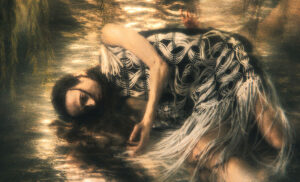
Finnegans Wake: Here Comes Everybody is the opening concert in a cycle of works adapting James Joyce’s great modernist novel for the musical stage, performed by Roger Redgate and Ensemble Exposé.
Created by composer and author Alastair White, the cycle is conceived as a thirteen-year project leading to the book’s centenary in 2039.
Here Comes Everybody is the beginning of the adaptation of James Joyce’s famous novel.
Roger Redgate and Ensemble Éxposé are a group recognised for championing the most challenging of contemporary music since its formation in 1984.
Alastair White’s work has been described “a whole new exciting genre of art”.
Produced by the Irish curator Gemma A. Williams, the project is supported by DCCI and created in partnership with the London Irish Centre.
To accompany this show, the London Irish Centre is hosting two workshops delving deeper into Joyce’s acclaimed publication.
Alastair and Gemma took time to chat to The Irish World about the project.
Where did the idea for this project come from?
Alastair: “Well I read the book a fair few years ago and just firstly fell in love with it head over heels.

“I found it was a work unlike anything else I’ve ever read, totally different from the way it appears in our cultural consciousness.
“Actually it’s an incredibly generous, beautiful book.
“It’s almost like hanging out with a person, being present with somebody, so full of ideas and inspiration of all these things.
“I suppose my work had taken a direction of exploring this notion of the surface in modernism which is a complex idea that we have got modernism all wrong.
“We read modernist texts such as Finnegan’s Wake but also texts like The Waste Land, even texts like Hemingway through a literary frame that either comes from before it, from romanticism or from after it, from postmodernism.
“What I mean by that is that we always see them as being something other than they are, that is modernism in all its complexity with all of its references.
“We think of it either as a romantic depth that is almost hiding something or in postmodern terms of being some kind of signifier in play that something refers to something else endlessly, endlessly, endlessly.
“Actually if you approach modernism on its own terms, it’s not really like that at all.
“Modernist texts seem to me to be yes, built upon this objective structure whether that’s in Hemingway, there is the implicit unsaid extra textual elements that invest the surface of the text with this energy, whether it’s in Eliot of these endless references and in Joyce too there’s a sense when you’re reading Finnegans’ Wake that there is this endless subterranean subconscious depth within it, that everything could be something else.
“What I think that’s given us the wrong impression of is that we approach these texts as though we need to decode them, as though they’re puzzles when in fact they’re very much about this sense of pure being that I think was definitely in the air at that time in the 20th century which is that the world is as we encounter it as a surface.
“When I talk about modernism as a surface, people sometimes think of it like I’m referencing Toulouse or I’m referencing a kind of simplicity, I’m not.
“I’m just saying that an encounter with Finnegan’s Wake should be done upon its own terms as it is on the surface of it.
“It’s not a Sudoku puzzle, it’s not a library.
“Of course you can treat it like that but the greatest encounter with these texts, whether it’s Hemingway, whether it’s Eliot, whether it’s Joyce, is upon the level of the surface.
“This is informed by not so much a literary critique as a musical one.
“In recent years, my music began to explore an attempt to reconcile this position.
“I suppose another way of explaining it would be like when you look at a painting.
“A painting is a logical whole, a painting is invested with meaning and yet the way that you engage with it is by tracing your eye audaciously across the canvas in a way that is almost free and to an extent nonlinear and yet also invested with linearity.
“It came to me that this notion of the surface was a very powerful one firstly on one hand to find a way through this impasse with the musical composition but secondly to reread books like Finnegan’s Wake and modernism more generally and present new forms of encounter with them.
“That was where the project came from and there would have been a way to do a one hour boutique opera of Finnegans Wake but that would be almost an insult to it.
“Finnegan’s Wake is a book that explodes the literary genre, it transcends it
“It completely remakes what we even think of a novel and so the only way to adapt it is to do a similar thing to opera.
“To say, ‘Actually we need to find a totally new way of approaching how we imagine opera, what opera could be’.
“We’re also drawing influence from the way he created it right through this notion of the work in progress.
“There’s something about the text that is fluid that occurs in time, in development as a process and so that’s the idea behind this.”
Gemma: “Obviously I’m Irish but have lived in London for a number of years and we’d always wanted to do something that was either in Ireland or of Ireland so we’d always been having these discussions and thinking about, ‘What can we do that would be interesting and novel and something new that we could do related to Ireland?’
“And then actually it was when we were in Dublin one weekend, in Toner’s.
“I used to organise concerts there way back in the day with indie bands and stuff like that.
“Toner’s is such a great pub, brought him along and it was actually there that we kind of thought about this idea, and it evolved from there.”
Alastair: “There’s something that you can catch in Ireland.
“It’s like one of the seven wonders of the world, the sound of Ireland that Gemma really put us onto.”
It’s quite the undertaking in terms of time if it goes until 2039…
Gemma: “2039 is the 100th anniversary of the initial publication.
“Also at the moment it’s difficult to do works at all when you’re creative so having any kind of long-term thought process is really useful.
“We just took it to the extreme and thought, ‘Well why not end the cycle when it began 100 years ago?’
“That was kind of our thinking.”
Alastair: “It means also that the opera can extend across time and space so that we can do it in that it in some ways takes place across 13 years as we develop it.
“The idea, hopefully, is that in 2039 we’ll be able to put it all together in Dublin but until then take it to many places, take it to many different places from London to Slovenia to China to as far as we can go and see how that influences the work, the world itself.”
There’s no end of places you can take it such is Joyce’s appeal..
Gemma: “We did an open studio as part of Irish Design 2025 and that was the real kind of groundwork that we have grown this initial first launch from.”
Alastair: “In our open studio we were very lucky to be visited by all sorts of folk who were working on Joyce.
“It was really important to begin the work in an open sense in Ireland so it wasn’t in a closed room outside of the country.
“It was actually in Cloughjordan, where Gem is from, so we did essentially an open composition studio where we had previous studies for the work on the wall as well as all of the research texts we’ve been using.
“The great thing about it was that we were visited by so many different folk who were just so passionate about the book from nearby in Cloughjordan and Nenagh but also as far as Dublin and people from all over the world.
“Another aspect of taking time to do it is to really build reception of the work into the work itself.
“Responsibility is the word to adapt work like this because it’s something that you can’t see as belonging to you as an artist, it belongs to everybody and so there’s a responsibility to make it something that works.”
Gemma: “We did find that since we’ve released the project people have been very receptive to it and you just get these Joyce fanatics who appear out of the woodwork.
“Joyce is a very special author in that way, that everyone feels like they own a little piece of it.”
Alastair: “Well I suppose it’s a very personal reading experience.
“All reading experiences are personal but there’s something about Joyce that you, as a reader, are in some way creating something.
“It’s like the subject comes to the fore in Joyce, I think, in a way that it doesn’t in many other authors.”
Gemma: “And it’s truly global.
“We’ve had people from just all over the world that are as invested in it as Irish people are.
“It’s wonderful in that way.”
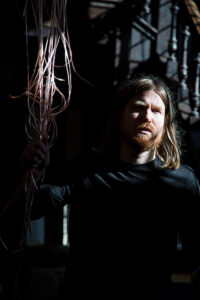
Do you think we’re seeing a resurgence of Joyce with the growth of Bloomsday in recent years?
Gemma: “Yeah, totally.
“I think with social media, it’s given it a whole other life.”
Alastair: “There’s something about it that inspires community.
“It’s something that you need to be with people to speak about, to discuss and that’s what we found in our open studio which was so beautiful: It was people from all walks of life, all ages, all nationalities.
“There’s something about it that is so generous that it keeps giving to each generation, that people will always discover something new in it.
“It seems like more and more people are finding the amazing things like Joyce and rediscovering it like every generation has.
“I mean we certainly have and it’s been wonderful.
“It’s been a wonderful, wonderful experience for us.
“I didn’t originally think I was going to adapt it as an opera.
“I was only reading it for fun but it really helped me.
“It helped me in so many ways.
“It helped me finish my own novel and then after that, when I started working with it musically, it totally transformed my compositional style.
“It’s a remarkable, magical book so it’s no surprise that people are rediscovering it.
“I do believe it’s a work that exists within the domain of literature and I think that’s really, really important.
“We’re trying to encounter it on those terms and that what music is able to do is in some way, present a rereading of not just Joyce but the general modernist literary canon that is maybe not available from within the form itself.
“While the two forms are totally distinct, they are able to shine light upon one another and that’s what’s been one of the fascinating things about this.
“But we’ve tried to keep our research within the grounds of the literature, its reception, the various secondary texts that have grown up around it, the various approaches of reading it, the various literary theoretical understandings of it.”
You bring it to London Irish Centre this week..
Gemma: “It’s very exciting.
“They’ve been such wonderful partners and I think for us it was really important to have it somewhere that had firstly a heart and a community.
“We’ve lived in London for quite a long time and love that city and it was quite important to have a venue that made sense so that seemed like a really good choice but something that’s maybe slightly unexpected as well.”
Alastair: “They’re a really, really wonderful organisation and we’re doing a couple of workshops that week just about the text and working with the text to create graphic scores and this kind of thing.
“We’re just so lucky to be working with Roger Redgate who’s an incredible and absolutely amazing musician, a real stalwart of the UK contemporary music scene and the fact that he’s bringing back his Emsemble Expose for this is just a huge honour.
“We’re just so, so excited to be able to do it.
“We really wanted to work with Roger.
“Roger and Ensemble Expose essentially developed this style back in the day.
“It was composers like Roger who essentially developed this style of the new complexity which is an attempt to push music to its maximalist transcendence and it was his generation that made it possible and particularly through this ensemble who premiered many of those works, so to have them come back and perform ours is, as I say, an incredible honour.”
Gemma: “I think it’s quite special.
“A lot of hardcore music fans, I think, are quite excited about the prospect of seeing them together again.”
Alastair: “There might be a question about why we’re not beginning it in Dublin and why we’re beginning it in London.
“There’s a few reasons for that but with the long-term project of exploding it through space as well as through time, and part of that is a movement towards Dublin.
“We were conflicted about where to begin it but in the end, this was the place that it felt right, that it has to move towards that city rather than begin there and if so, there’s nowhere else to begin it like the London Irish Centre which is, as you know yourself, a wonderful place with so much soul and an amazing cultural space as well.
“We’ve seen quite a lot of wonderful things there over the years so we were so honoured, we were over the moon when they came on board to work with us.”
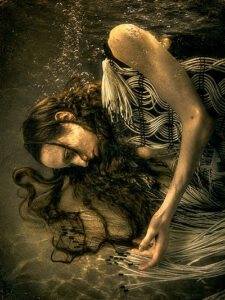
I usually ask what is next but I know what you are working on until 2039, could you adapt other Joyce works in the future?
Alastair: “I’d love to adapt the early poems.
“I just find them so utterly beautiful and I know Gemma you love Dubliners.”
Gemma: “Yeah, it’s funny.
“I just read something earlier about a novelist who said her favourite story from Joyce was The Dead.
“I agree and I know that there’s been a production of it in Dublin a couple of years ago, which I missed and I was also quite sad because I always thought I’d love to do something with The Dubliners but maybe the challenge is finding some way, some new way of doing that.
“And beyond Joyce too, we might find inspiration as well.”
Finnegans Wake: Here Comes Everybody comes to London Irish Centre 7.30pm Saturday 5 September.
For booking and more information, click here.
For more information about the project, click here.
