


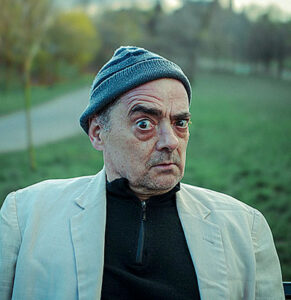
Peter McCormick told David Hennessy about his new play developed with the help of real families living with MND.
Peter McCormick’s new play Nesting will have its premiere at this summer’s Edinburgh Fringe.
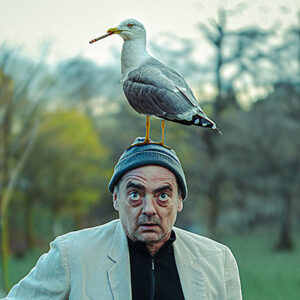
In a darkly comic and absurd exploration of love, death and duty, the story sees a seagull attempt to coax a man diagnosed with Motor Neurone Disease (MND) to relinquish his body to him and in return grant him eternal peace.
Researched with people diagnosed with MND and their carers through the Irish Motor Neurone Disease Association, the four-hander follows Francis, a man caged in his home with a devastating diagnosis.
An anthropomorphised seagull who dreams of being human offers an escape and free his pregnant daughter from the burden of his care.
Ben Standish directs the cast made up of Billy Mack as Francis, Francesca Hess as Emma, Michael Guest as Gull and Peter himself as Dr Bell.
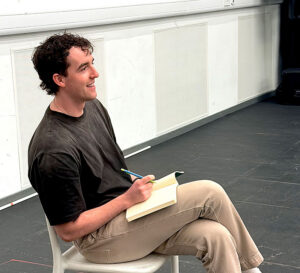
Peter McCormick (28) is a writer and actor from Rathfarnham, Dublin, and recent graduate of the BA Acting programme at the Royal Conservatoire of Scotland, Glasgow.
The Irish World featured him in 2024 when his debut play Beyond Krapp premiered at the 2024 Edinburgh Festival Fringe at Pleasance Courtyard.
Peter took time to chat to The Irish World.
I understand it was personal experiences that brought you to this subject matter..

“It was.
“My grandma died at home.
“She didn’t have MND, my grandma had dementia and Grandma died at home in September 2020 and she died surrounded by her family.
“That is the way to go.
“We were all in the room with her.
“But this is going to get really pretentious really fast.
“I remember I was 14 and I did a bit of Shakespeare.
“It was Jack from As You Like It, and he does the All the World’s a Stage speech.
“It goes through the different ages of man, it gets to the seventh age and I didn’t understand that.
“I understood the sixth one and that was the old age, ‘The lean and slipper’d pantaloon, With spectacles on nose and pouch on side, His youthful hose, well sav’d, a world too wide, For his shrunk shank’.
“That’s the old man and I got that.
“The last one then, the seventh age is ‘Second childishness and mere oblivion’.
“I didn’t understand that.
“At 14 I didn’t get that and it wasn’t then until Grandma was with us in the house and you watch a neurodegenerative illness take hold that you go, ‘Oh, now I understand’.
“There’s a real moment in helping your grandma on and off the loo and everything that comes with that- I should be really clear, I was not by any means taking the brunt of it, not even close.
“My parents, grandma’s other two sons and their wives, they took the big load of it.
“But she was in our house and the impact it had on my mam’s own sense of identity.
“Even though it was her mother-in-law, it was still my mam who really was her primary carer and that just got me thinking about what it is to be a carer for someone.
“In the early stages, my grandma was aware that she was becoming dependent on other people and that impacts her own sense of identity.
“It wasn’t so much the disease initially that I got interested in, it was care and identity and what happens when a child becomes a carer and a parent becomes a patient.
“Then I was at a funeral of a family friend, an incredibly bright man who had died rapidly after a motor neurone disease diagnosis.
“Listening to his funeral and then talking to his widow afterwards, who has been so incredibly generous to me in sharing her experience and her story, that’s when these ideas, these themes, these interests started to all kind of blend together.
“There are four elements to the play.
“The third element then is that around 2020 or in the last couple of years, my parents reached retirement age and you had this unusual situation where I graduated from college and drama school and you’re eternally going, ‘God, what the hell do I do now?’
“And I looked at my parents and thought, ‘Well, that’s great. They’ve got themselves sorted. They’ve achieved and they’ve gone through the workforce side of things and now they have this freedom in retirement’.
“And they’re looking at me thinking the same thing as a lad in his 20s and so you’ve two groups that are at this point of transition, both facing into unknown, both a little ‘grass is always greener’ jealous of each other, and then you’ve got my grandma who is just looking towards the very end of her life.
“That got me thinking about what it’s like to be the sandwich generation because there’s such a brief moment, especially in my parents’ life and my mam’s life, where she’s not called upon by anyone.
“She has been a mother and then just as I and my siblings reached adulthood and took on responsibility of our own, she’s there looking after my grandma.
“That sandwich generation is something I got really fascinated by as well.”

One of the sad things about dementia is you lose the person long before they actually pass..
“Yeah, it is and MND is different.
“I got really interested in MND particularly because MND is a very individual disease and one person’s experience is not like any other person’s experience.
“I don’t want to speak as an authority in any way, I’m absolutely not but perhaps unlike certain experiences of dementia, you have a longer period when you’re very aware of what is going to happen to you and what will be coming down the road.
“One of the key things in recent years was Charlie Bird: You’re listening to a man speaking very vulnerably about his experience with an acute awareness of where it’s leading to and that I find both shattering but also desperately real and vulnerable and human, that recognition of your own mortality and an ability to articulate that mortality and the reality that you’re faced with is really extraordinary.
“This play is trying to capture that.
“Motor neurone disease is a horrific disease but it’s also a disease that many, many people have been willing to share their experience of with me.
“I’ve learned a huge amount from them and I’m very grateful to them.
“This play wouldn’t exist without them.
“I’m not a good enough writer to make up or prescribe these experiences.
“People say, ‘Write what you know’ and I know my own personal experience of love and familial identity and duty but I don’t know what it’s like to have motor neurone disease and I certainly don’t know what it’s like to care for someone who does.
“I think the honour of being a writer, and it is a serious privilege, is getting to learn and understand all people’s stories.
“I was on the phone to a woman who has motor neuron disease, who the Irish Motor Neurone Disease Association put me in touch with, two nights ago and the only word I could use is honour.
“It really is.
“We spent hours just talking to each other and them telling me their stories about how they either got their diagnosis and the experience that came with it in terms of the impact of it on their identity and their sense of family and their sense of being a burden or otherwise and then carers and how carers found it and how it impacted their lives.
“It has been at times difficult but my experience and the emotion that I’ve taken from it is obviously nothing in comparison to what the patients and their carers have had to experience and it’s been a serious honour to listen to them.
“Whatever occurs with the play, sitting down and chatting to these people has been the absolute joy of my time writing this.
“There are moments as a writer and as a creative where you go, ‘God, why the hell am I doing this? Is this really what I want to do in my life?’
“Especially when you’re kind of still quite young and you’re looking at other people pursue more traditional paths and you’re thinking, ‘What am I doing here, lads?’
“And then you have those days when you get to talk to people and you go, ‘This is what matters, this is special. I’m really, really, really lucky’.”
Like dementia, MND can take things that make a person who they are. I recall seeing Charlie Bird, who was always so eloquent, struggle to express himself as the disease progressed..
“Absolutely.
“The play is about a man who lives with his daughter.
“It’s just the two of them and what I was really interested in looking at was his identity as a father.
“It’s a generalisation but a father might show love more in acts of service sometimes than through their words or touch.
“With Francis, his natural method of showing love and affection to his daughter starts to get taken away from him.
“He can’t do things for her.
“He can’t put up shelves, he can’t help attach a new washing machine.
“She’s about to have a baby and he’s a carpenter so the play starts with him building this cot.
“He’s drawn this very elaborate plan and details for his grandchild’s cot.
“It’s all very over the top and he finds over the course of the play and the diagnosis, he’s not able to build that cot but it’s such a deep sense of frustration because that’s how he shows love.
“Meanwhile you have Emma who’s trying to say to him, ‘This isn’t what I need from you. I don’t need you to do something. I just need you to spend your time with me and I want to spend my time with you. It’s not about what you do, it’s just about who you are’.
“And that can cause quite a degree of tension and friction where two people’s traditional method of communication starts to break down and a father and a daughter’s traditional method of communication can be more acts of service rather than words.
“This was a particular challenge of the piece but also we don’t want to prescribe motor neuron disease.
“The play is not about putting late stage MND on stage and looking at the physical elements of that.
“The play is about the impact of diagnosis on identity and relationships.
“Things like being unable to light a cigarette and being increasingly unable to be mobile independently or build the cot or make a cup of tea by himself, those are all in the play but really what’s important is that Francis starts to feel like he’s becoming a burden on his child and his child starts to feel like she’s becoming a carer but also she just doesn’t want him to go.
“This is the time she has with him, it is incredibly important to her as well so he starts to try and move away from her and she wants him to stay.”
In the story a bird comes along with a suggestion for him..
“This is the absurdity of it.
“Assisted dying was one of the dominant news stories and I don’t know where I stand on it.
“I don’t know how I feel about it.
“It’s a very personal issue and everyone who I’ve talked to has a different perspective, but I think theatre should lean into ethical grey areas.
“I think theatre should be about not prescribing answers or moral stances but about unpacking the grey and relishing the grey.
“I want to make theatre that causes debate and so the play is not about assisted dying in terms of whether it’s right or whether it’s wrong but the seagull was my way of grappling with that.
“Francis meets a seagull.
“When they reach a certain stage in their lives, seagulls can take on this mission that they identify a human being who wants to die and they propose to that human being that they will kill them and yet no one will know that they’re dead, they’ll take their body.
“Their disease, in this case MND, also dies with them and then the seagull controls the body and assumes their life.
“This is a vocation, a mission that certain seagulls can elect to undertake.
“That’s the proposal that Francis is faced with, that the seagull offers Francis: He can save Emma from being his carer, he can stop himself from being a burden to her by just dying now and letting the seagull assume his life.”
Interesting moral and existential question, is it a show that provides the questions rather than trying to give answers?
“Absolutely.
“Neurodegenerative illness, long-term care, palliative care, assisted dying: These are not things that should have simple answers.
“They don’t have simple answers and they shouldn’t but they’re also all about what it is to be alive.
“I understand that I maybe have a slight preoccupation with death.
“Death was what the last play was about.
“Death is the looming presence of this play but death makes me feel very alive and talking about death makes me feel very alive and hearing people’s own personal experiences and the challenges, the dilemmas that they face.
“That’s what Emma and Francis face here.
“I mean if you thought that you could save your children from the burden of your care, would you elect to give your body to a seagull when you know you’re going to die in the next two years anyway?
“Some people might and that’s what this play essentially is all about.
“Would you make that choice?
“I want my audience to come out of a theatre and feel a little bit closer to the surface of their skin.
“I want their hairs to stand on end and their hearts to be racing and just for a minute remember that they’re this biological clump of cells that thinks and feels and loves, because they will get on a bus and go back to scrolling through Instagram but just for a moment, they should feel raw and alive and vulnerable and that is found as much in comedy as in tragedy.
“This play is very much a bit of both.
“I feel like people think, ‘Oh, it’s a very heavy piece’.
“And it’s a heavy topic but the way we deal with these things is through laughter and absurdity and so the piece has to be funny.”
You have mentioned the associations and real people who have spoken to you in your research, do you feel a real responsibility to them with this piece?
“Absolutely and one of the key themes of this play is responsibility and what your sense of obligations are.
“When people are generous enough to share their stories with you- These aren’t stories, these are realities for people.
“It can be a story to an audience on stage but it is someone’s reality. That’s a very precious thing and it’s a delicate thing and it’s not something to be taken lightly.
“This is not a verbatim play.
“This is not about any one person’s experience.
“You feel a deep sense of responsibility to get it right but I will always want to make the best possible work I can.
“I always want to make the most impactful, powerful, entertaining and meaningful piece of art that I possibly can and I would do that regardless so once you get into the rehearsal room, it’s about making a play.
“No play can ever do justice to these people, to the experience of being a carer or of receiving a diagnosis.
“It can never touch that but possibly it can reflect the love and the poignancy and the humanity and the emotions that are felt and if people can come out feeling just that little bit more human and a bit more real, then I will feel like we’ve done something of use.
“But this is not an advocacy piece and I think it would be wrong and unfair on all those wonderful organisations to suggest that it is.
“They’ve just been really fabulous at educating me.”
Would you like the show to get another life beyond Edinburgh?
“Totally, this has to be only the beginning.
“This is an incredible cast.
“Ben Standish is an unbelievable director.
“Vanishing Point have been supporting us and Billy Mack, who’s just a Scottish stage screen legend, is our lead actor Francis.
“We would love this now to go to London, to go to Dublin and to tour.
“Some of the people who’ve supported us have been in Ireland and it’s also a very Irish play.
“I cannot pretend to write in any way other than in a very Irish way particularly when you’re talking about death and you’re talking so emotively. You cannot help but write in a way that is emotive and honest and then immediately undercut by self deprecation and humour so this play for me has to be on an Irish stage and I would just be delighted if we could do that.”
Nesting is at Summerhall, Old Lab 6-31 August as part of Edinburgh Fringe.
For booking and more information, click here.
