


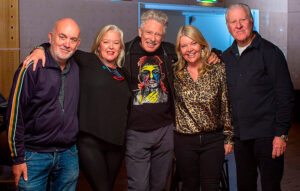
Billy McGrath, producer/ director of Ballroom Boom the film about the showband scene, spoke to David Hennessy ahead of its screening at Irish Cultural Centre next week.
Ballroom Boom screens at The Irish Cultural Centre in Hammersmith next week.
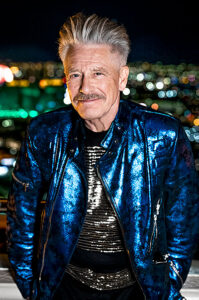
Fronted by U2’s Adam Clayton, Ballroom Boom is a documentary looking at the prevalence of the Irish showband which dominated pop culture during the 1950s and 60s.
The film examines the impact of Irish showbands on the modern Irish music industry, as well as the influence of the movement on later generations.
The film also discusses major figures in the scene like Joe Dolan, Brendan Bowyer, Eileen Reid and the tragic event of The Miami Showband Massacre of 1975 where Ireland’s most popular showband were murdered by the UVF, leaving only three surviving band members.
The documentary was produced by Sideline Productions and directed by filmmaker Billy McGrath, known for films such as Citizens of Boomtown, the story of Bob Geldof and The Boomtown Rats.
Billy McGrath was a major figure in the development of Irish music as a manager, promoter and PR man as well as comedy (performer, writer and promoter) before training with RTÉ as a TV producer / director in the mid 1980s.
Both passions were to the fore as new ideas and talent were brought to RTÉ screens before Billy moved to London as features director on the BAFTA award-winning Channel 4 music series WIRED (Initial TV London ‘88).
His documentary films with U2, The Pogues and Clannad were screened at festivals in Dublin, London, Washington, Brazil and on TV throughout the world.
In the 1990s Billy again immersed himself in script and comedy. Working between London, Belfast and Dublin, Billy also kick started an Irish comedy circuit, won a European Script Award,

The National Entertainment Award for Comedy, was the first course designer and trainer with Irish Screen Training (Writing Comedy for TV) plus gained project development and management experience with major production companies and broadcasters in Ireland and the UK.
Returning from London in 1998, Billy wrote and produced Gay Byrne’s Make ‘Em Laugh, joined Ireland’s first commercial broadcaster TV3 as Executive Producer and soon after was appointed RTE’s first Commissioning Editor of Entertainment (2000-02) before re-joining the commercial world.
Billy’s first independent commission Close Encounters with Keith Barry (a talent spotted while at RTE) was nominated for both an IFTA and Rose D’Or Award plus remains RTE International’s biggest ever success in the international TV Entertainment sales market.
Billy took time to talk to The Irish World about Ballroom Boom.
Are you looking forward to bringing the film to the Irish Cultural Centre in Hammersmith?
“Yes, I’ve been very energised and pleased by the reaction so far.
“We had really good screenings in Chicago, New York, and Toronto and it was selected as one of the feature films at the Galway Film Fleadh as well.
“It wasn’t intended to be a feature.
“It was intended to be two by one hours for RTE which it was broadcast as on RTE at the end of 2024, but it had a very Irish angle on it.
“In other words it catered for the Irish audience but it was only after Christmas myself and Adam Clayton had a chat and we thought the story of Irish music really was told through showbands.
“It really began through that whole exciting era of the 1960s so we said, ‘Why don’t we re-edit it? Why don’t Sideline Productions, that I run and own, invest in an international version?’
“And Adam very kindly said, ‘I’ll give you an extra day filming’.
“So we recorded extra links and we found extra archive.
“When you’re trying to produce an international music film for the world, the costs of the publishing rights are extortionate so we had to take out certain songs and we had to re-record certain styles of music to make it cost-effective.
“But we then produced an 85-minute version which was really aimed at trying to explain what kind of music industry did U2 enter when they started?
“I suppose that was the big shift so now I think it stands up there as really the history of Irish pop and rock music and how it developed and how bands like the Boomtown Rats and Thin Lizzy all entered.
“And of course Van Morrison was in a show band, as was Rory Gallagher so there’s that kind of link.
“I’ve always been infused by Irish traditional music and I always was conscious as the show bands were waning, the whole Irish rock and trad scene was beginning to bloom.
“Bands like Horslips, Planxty, Christy Moore, Paul Brady-all those acts began to form and began to be influenced by rock but then took their own music and I suppose that’s the big shift.
“I hope it stands up there.
“I hope people enjoy it.”
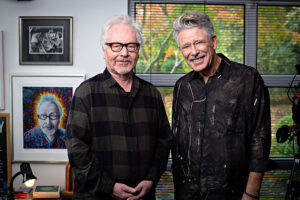
Take us back to the beginning, prior to the original RTE version even, what made you want to explore the showbands?
“I’m from a family of seven kids and we all grew up beside Dublin Airport on the Old Swords Road, my mum and dad, obviously before Ryanair and before we even thought about going to Spain for a week, they used to rent a house in Arklow in Wicklow every July probably from probably 1960 to ’68 and around the corner from the house was what we called the Entertainment Centre in Arklow.
“The entertainment centre was a really buzzy place where everyone went.
“There was a swimming pool, there was afternoon discos but on the evenings, most nights of the week, especially in July, they they’d showbands and of course Arklow would be packed with Dubliners as well, right? So obviously the Miami and the Plattermen, Eileen Reed.
“But as I grew up, I probably went down there probably at the age of like 12 but at the age of 15 and 16, I was helping with the coats and then I began to meet the bands in the afternoon and bring in the gear.
“Then when I was probably 16 or 17, I was allowed to sit at the side of the stage or help them load the gear afterwards so I began to get really interested in that whole world but at the same time, at home in Dublin, I’d be listening to Jimi Hendrix and Cream and the Kinks and I suppose as I grew older, I began to see that that era was a fantastic explosion of music.
“Okay, some of the bands were rubbish.
“Some of the bands were copycats.
“Some of the so-called showband stars were literally puppets for a group of managers who ripped them off in some cases.
“But there was other people, big people who were clever: Dickie Rock, Brendan Bowyer, and they ran their own operations and of course I got involved in the music industry.
“Then I ended up being the ents officer in UCD in 1976.
“I started in June and at the end of July, the Miami Showband massacre happened.
“It was a dread atrocity when the Miami showband were attacked on the way back from a gig in Banbridge and a bomb was planted in their van but it exploded prematurely.
“Two of the bombers were killed and it ended up being a total bloodbath.
“It was dreadful and that stuck in my mind.
“I had been in touch with one of the survivors of the Miami, Steve Travers for years, and I really wanted to try and do a 20th anniversary so in 1995, I thought I’d love to do a doc but it turned out that BBC Northern Ireland was doing one so that was that but I kept in touch with Steve.
“When I approached Adam Clayton about the idea, at first he was going, “Oh yeah, showbands. I remember them’ and then I talked about the Miami.
“Of course both Steve and Adam are bass players.
“Steve lived in Cork and Adam just said, ‘Look, I’ll talk to you after I get back from Cork. I’m going down to visit a friend for a week’.
“And I said, ‘Oh, you’re in Cork?’
“’Yeah, I’m in Cork next week’.
“And I said, ‘So is Steve. Will you give me a couple of hours and maybe sit down with Steve?’
“And this was before we even got an RTE commission.
“This was serendipity, fate.
“So Adam and Steve sat down and did a two-hour interview and I showed that to the commissioning editor Colm O’Callahan in RTE and he said, ‘Oh, this is good. This is a side of the story that we have never, never heard’.
“And then we got the commission then to do the two hours for RTE and that was named Ballroom Blitz because we used the song from Sweet but then when we went to look at re-editing it into the feature doc, we weren’t going to be paying £20,000 sterling for a licence for Ballroom Blitz.
“The cost of licencing music for the international market is sometimes very, very prohibitive.
“But that’s how really the idea for the TV series started, was with Adam and Steve Travers sitting down man to man, bass player to bass player discussing what ostensibly was a crime against humanity and it was very emotional and I think a standout section of the film.”
Any film or documentary series about the showbands would have to talk about the Miami Showband massacre, some say that was when the music died..
“Yeah, I was just saying that I was the entertainment officer for UCD and that had probably one of the biggest live venues in Dublin, maybe even Ireland and we used to pack it out.
“Maybe once a month a band from London or wherever would come over but once the Miami atrocity happened, every band from the UK cancelled.
“The whole touring world sort of stopped, especially up north and we had to go and find new acts and one of the acts we saw was a young band from Dun Laoghaire called the Boomtown Rat so we booked them in for the freshers ball and we booked them in for the Christmas ball, the rag ball.
“At the end of that year Bob Geldof asked me to help him organise a tour of Ireland of young rock bands because he was really an anti-showbands not so much the musicians but just the grip that he said the so-called mafia had on the live circuit in Ireland.
“So we put together a tour of three Irish bands and then after that, the Boomtown Rats were as tight, went to London. The rest is history.
“After that I saw that 276 people paid in Galway and 304 people paid in Limerick but there was no rock gigs there so I went back and opened up the gigs there.
“Then you had Queen’s University in Belfast who were beginning to run gigs, the Arcadia in Cork so gradually a rock circuit started and that was at the same time as the showbands were dying off and at the same time, as bands like Planxty, the Chieftains, Paul Brady, Horslips were all beginning to emerge so a lot of the young Irish musicians who had aspirations and ambitions now didn’t have to join a showband, they could start a rock band.
“They could play with a trad band but not necessarily the diddly eye so I think for me that was the turning point when Irish musicians began to look in inwards and began to appreciate the indigenous cultural phenomenon which was Irish traditional music and that has never stopped.
“It’s still there now with bands like Amble and Kneecap and CMAT and such a fantastic growth and explosion of Irish bands at the moment which are beginning to dig deep into the treasure trove of our own Irish traditional music.”
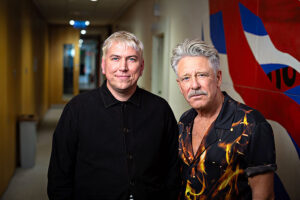
One band that features in the documentary is The Mary Wallopers as vocalist Charles Hendy who has great things to say about the whole showbands scene..
“That kind of came about because a friend of mine who works in RTE Radio said, ‘Do you know there’s a guy from the Mary Wallopers who presents a show on RTE Radio One playing Irish showband songs?’
“And I said, ‘No, I’ve never heard of that’.
“But that’s how that came about.
“The RTE version that went out, Ballroom Blitz, was slightly nostalgic but Ballroom Boom, that people are going to be seeing in the ICC, I think they’re going to see a much more streamlined narrative that brings Irish music from the Sean O Riada days from the early people listening to Elvis and stuff like that and Radio Luxembourg and it brings them through all that showband phenomenon out the other side into the growth of what everybody appreciates that Ireland sits very very high as a powerhouse of modern contemporary music.
“I did history at UCD and I’m always drawn to stories where somebody would throw a pebble into the water and then the ripples will start to form and spread, I love those stories and I think the showband era and of course we do Bill Fuller in the doc.
“He started the Buffalo Ballroom in the early 1940s and that became the Electric Ballroom and then he owned ballrooms all over Britain and all over America and Mexico and everything else.
“He was a phenomenal character.”
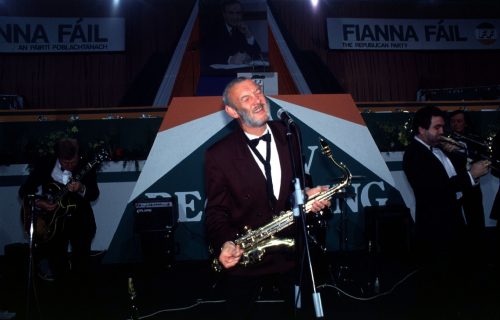
A lot of the figures discussed in the film have passed on such as Joe Dolan and Brendan Bowyer who feature in archive footage. You got to interview Paddy Cole who has sadly passed since..
“Yeah but Paddy wasn’t well when we spoke to him and we made sure that we interviewed him very close to his home,
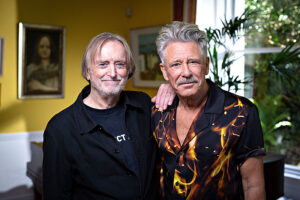
“When he did pass away Adam called and said, ‘Look, I’d love to go and pay my respects’ so I went and collected Adam and the both of us paid our respects at the removal.
“Paddy was a genuine musician, it ran through his blood and I loved the fact that he could go from jazz to pop to country to everything and the amount of instruments he played, he was phenomenal.
“There are certain musicians there that deserve a statue and Paddy was one.”
I was interested in the story of The Beatles supporting The Royal Showband early in their career, were there surprises for you that turned up in making the documentary?
“Yeah, there was.
“I knew about The Beatles supporting The Royal Showband but as I began to explore the wider narrative, I began to appreciate that during the late 70s, another thing that happened.
“In the late ‘50s, most kids left school aged 14.
“They either emigrated, worked on farms but there was nothing around and that changed in the 1960s when education became hugely important.
“And then what the Irish government did, which I thought was groundbreaking, was they introduced free education for third-level students in the early 70s.
“That meant that you could finish school and you could look at a profession and then you went into the university and what university does traditionally is it throws up a huge amount of individuals, rebellion, long hair, drugs, music, change and of course that’s where the Horslips thing kind of started because they met at college.
“As I say I was an ents officer in UCD in 1976 and the last thing we’d book would be a showband so there was a great energy and a great buzz, I think, around the early 70s and then when the Boomtown Rats exploded, most young musicians then saw them on Top of the Pops and said, ‘I’m not going to play copycat music and wear a suit. I can be who I am, write songs about who I am, where I live’.
“That was the big, big revolution to Irish songwriters and Irish musicians and that began Irish studios, Irish producers, Irish arrangers, Irish record labels so it all began to change where people began to not look inward but look outward.
“When people walk out of the cinema after Ballroom Boom, I hope they get that feeling, that this was a quite a deep dive into how the Irish music industry developed but showbands were at the cornerstone of it all.”
Of course you already screened in London when you took it to Electric Ballroom, what was the reaction to that?
“That was brilliant because Kate Fuller, who was in the documentary, she’s a daughter of Bill, actively manages the Electric Ballroom.
“And again serendipity.
“Adam was going to be in London for a certain amount of days so I said, ‘Look, if I can convince Kate to screen it, would you come and do a Q and A?’
“And he said yes.
“It turned out to be a Monday night. The place was jammed.
“The place was packed.
“The Q and A was interesting because I didn’t imagine, and certainly Kate didn’t imagine, that people would come over from Spain.
“We didn’t know amongst the audience were all these U2 fans who had flown over.
“You don’t realise how big U2 are until you enter that world.
“It’s great to see it on the big screen.
“It’s a great buzz.
“No matter how much you’ve seen it before and how many months and years I’ve worked on it. It’s still a buzz to sit down, the lights go down and to watch it on the big, big, big screen. It works.”
Your brother Dónal MacCraith is well known in the London Irish community from his work with organisations such as BIAS, you must be very proud..
“I am.
“I used to go over and stay with him.
“He never was a drinker but he would hang out with the crowd in the bar.
“I always remember standing back and listening to the energy of this group of people who were all trying to solve problems and it was all about the disenfranchised Irish people, mostly the older people some who went over there maybe in the 40s and then they reach the age of 62 and they still live in a bedsit, they’ve no pension, they’ve got arthritis in their hands, they’ve been building blocks for 30 years and they’re lonely and they’re possibly drinking a bit too much and not really getting exercise.
“He just saw this and I really, really admired that he started to kick open doors and eventually BIAS emerged.
“I have huge admiration for his determination and his will to fight for the rights of Irish people in London who didn’t have many rights or access or wealth or whatever.”
Ballroom Boom screens at The Irish Cultural Centre 7pm on Thursday 24 September. The screening will be followed by a Q and A with Billy McGrath.
For booking and more information, click here.
