


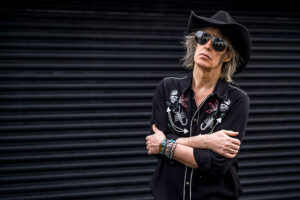
Mike Scott of The Waterboys told David Hennessy about rediscovering lost music from their Fisherman’s Blues era ahead of a new tour celebrating their recent compilation, Atlantic Rain.
The Waterboys recently released Atlantic Rain: The Lost Fisherman’s Blues Recordings.
The three disc set is made of rediscovered music from the recording of the band’s iconic 1988 album.
The band worked on material for two and a half years on and off and with so much to choose from, Scott reveals he was never sure he had chosen the best of that material for the album.
The Fisherman’s Blues went on to be acclaimed but Scott was never sure it was the best representation of them at the time.
He would revisit those discarded recordings for their 2013 compilation Fisherman’s Box but only now is he happy he has rediscovered it all.
Mike Scott took time to chat to the Irish World about the new compilation and their forthcoming The Fisherman’s Blues Revue tour with Steve Earle joining the band as a special guest.
Mike Scott told The Irish World: “I think the stuff in Atlantic Rain, most of it’s as good as what was on Fisherman Blues so people should check it out, and they will love it.”

What has it been like going through the old material for this new collection?
“Well a lot of this stuff was music I don’t remember playing because we played so much music back in those days.
“We’d just sit and play for hours.
“I thought I’d heard everything from the Fisherman’s Blues sessions, but apparently not because there were loads of tracks that I just don’t remember us playing at all, but there’s the evidence.”

You were working on The Fisherman’s Blues for two and a half years on and off. You have said you lost your perspective and having so much material didn’t help. Was it a difficult process?
“It wasn’t difficult making the music or recording the music-That was the easy part.
“The difficult part was what to do with it once it was recorded and there was so much of it that it was very hard for me to make decisions.
“We would have multiple versions of songs.
“I don’t mean six versions of a song recorded in one day.
“That was easy, you would just pick the best one.
“But maybe six versions of a song recorded on different occasions months or even years apart with different musical ensembles so they would sound completely different.
“Trying to pick the best one out of those, that was difficult.
“There was always something that I loved about every recording and it was difficult to make the ruthless decisions necessary.
“It was just difficult for me making those decisions because it was so much music and I loved it all.”
So as you put out the album in 1988 there must have been some uncertainty still, was there?
“I wasn’t sure about it at all.
“It was a selection of tracks that I made.
“Some of them I was sure of like the title track or We Will Not Be Lovers, Sweet Thing, The Stolen Child, And a Bang on the Ear: Those were easy ones.
“Kind of like a football team, they selected themselves for the match but then from the others, some of them I wasn’t sure about at all.
“There were lots of great tracks that I see now I should have included that I didn’t and it should have been a double album or maybe three albums released one a year over a period of three years.
“It’s easy to look back now and see what could have been done.”

Did the album being so acclaimed on its release allay those feelings at all, perhaps not because you knew the other material that was there..
“Yeah, it didn’t take away my feelings.
“Of course it was a relief to me that people liked the record and over the years it’s come to be regarded as a classic.
“I’m very relieved about that and pleased about it but I always knew what else there was, what other great recordings there were and it was always a source of regret to me that the people who loved Fisherman’s Blues thought that that was all we could do because there was five or six times more music than that.”
What was it like to revisit the old material nearly four decades on, it must have been like being reintroduced to yourself as a younger artist which I’m sure is a very different artist and person..
“Well, the guy that made those recordings is still inside me so it was nice to rediscover him and hang out with him for a while.
“It was a thrill discovering things that I’d forgotten about, a real thrill and accompanying that was always the feeling that, ‘Well, why on earth didn’t I do something with this at the time?’
“But I know the answer.
“It’s just because there was so much I couldn’t keep track of it all.”
A lot of the tracks have never been performed live. How are you looking forward to your upcoming run of shows that includes the O2 in London?
“It’s called The Fisherman’s Blues Revue and it’s an idea that I’ve had for a very long time of doing an all-star show in the style of Bob Dylan’s Rolling Thunder Revue which happened in 1975.
“I always thought Steve Earle was a good guy to bring on board for such a tour, so he’s with us.
“And Steve Wickham, who was our fiddler during the Fisherman’s Blues period, he’s come back.
“And also our old flute player Colin Blakey, who plays on that version we did of Yeats’ Stolen Child, will be there too.
“It’s lovely to work with an extended lineup like that.
“It gives us so many musical options and we can do justice to tracks like We Will Not Be Lovers which really needs the fiddle.
“So yes, very exciting.”
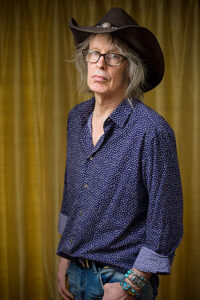
What is it like to have someone like Steve Earle involved?
“I’ve known Steve for a long time and interestingly he was the first artist ever to cover a song from the Fisherman’s Blues album.
“He did a version of When Will We Be Married? only a few months after the original album came out so I know he appreciates that period of Waterboys music, and we appreciate him.
“So he’s going to play on lots of our songs and we’ll back him on his songs.
“He’ll be a fully integrated member of the cast and I’m very intrigued to see how that works out and what happens when I hand over to him to do lead vocals.
“There’ll be some songs where we share vocals like And A Bang on the Ear which was on the original Fisherman’s Blues album.
“It’s a song about my old girlfriends.
“Well Steve Earle has been married a number of times and I said to him, ‘Steve, do you think you could write a couple of verses about some of your ex-wives and we’ll weave them into the song?’”
A commonality you and Steve has is working with Sharon Shannon. She was part of his original Galway Girl and of course she joined The Waterboys just after your Fisherman’s Blues era..
“Yeah, she was there for the album after Fisherman’s Blues, Room to Roam.
“She was in The Waterboys for just over a year.
“It was Steve who played with her first and then I met her independently on the scene in Galway.
“She was always running from one session to another with her accordion under her arm and I would bump into her.
“I went to see her play live in Dublin at a little venue called the Purty Loft in Dun Laoghaire and then she invited me to go down for a weekend of music with her and her friends in Kinvara.
“That’s when I really got to know her and got to know her music.”

I heard that having heard of her being such a masterful musician you were surprised to meet her and see she was so young..
“Yeah, her name was spoken in such glowing tones around Galway that clearly this was considered to be a great master musician.
“I didn’t expect her to be quite as young as she was, maybe 25 or 26 but actually she was 20, maybe even 19 when I met her and she was just this little face looking out of a cagoule hood on a rainy day.
“It was on Cross Street in Galway where I met her outside the pub Neactain’s.
“She just said hello and we shook hands but I could tell she was a really serious, heavyweight musician.”
You just mentioned Steve Wickham who was such an integral part of The Waterboys for such a long time, is it true you discovered him on a recording by the late Sinéad O’Connor?
“He was playing with Sinéad O’Connor.
“This was before anyone had heard of Sinéad and she recorded a demo for the record company that I was signed to.
“I heard the demo and of course she sounded good.
“I thought, ‘Well that girl singing is really good’, but what really caught my ear was the fiddle behind her voice because I’d been looking for fiddle for the Waterboys sound for some time.”
You were also there for the beginning of The Saw Doctors, was it around the same time you were working on The Fisherman’s Blues album that you discovered them?
“Well we used to see them playing around Galway.
“I remember them playing lunchtime gigs in the Quays Bar in Galway when we were out at Spiddal doing Fisherman’s Blues.
“Then we needed a support act and I thought, ‘God, those lads from Galway, Leo’s band’, so we invited them to tour with us.
“That’s what really turned them into a proper fighting machine of a band because before that they were doing weekend gigs in little pubs but suddenly they’re out there playing the Barrowlands Ballroom and the Kilburn National for three nights.
“It blooded them as a band.
“They’re such wonderful songwriters and great characters.
“I love them.”
What inspired your most recent album, last year’s Life, Death and Dennis Hopper? Have you always been fascinated with Dennis Hopper?
“I got seriously interested in him about ten years ago when I saw an exhibition of his photography.
“I knew him as a film actor and I knew he’d been in Rebel Without a Cause with James Dean.
“I knew Easy Rider, of course.
“I’d seen him in various other movies but I didn’t really know much about his life and him as a character.
“But after I saw his photographs, I got deeply interested in him and read all the biographies and read a great book of his interviews throughout his life.
“I noticed that he’d been a participant in many of the crucial moments in popular culture like acting with James Dean right at the beginning of youth culture. I always considered James Dean’s Rebel Without a Cause to be the big bang of youth culture.
“And then he was an early champion of Andy Warhol so he was there during pop art.
“He was involved in all the 1960s scenes like civil rights, the L.A. riots, the hippie scene around San Francisco.
“He was part of all that and such a fascinating journey that he took through all these moments in pop culture.
“So I sort of started wondering, ‘Well who was Dennis Hopper? How come he was all these things and what effect did that have on his persona and his imagination?’
“And eventually it turned into a series of songs and I thought it was going to be an EP, and then it was a long EP, and then it was a short album and then it was a long album.
“It turned into a sonic biography and as far as I know, it’s the only time anyone’s ever done an album that’s a musical biography of someone.
“Although there have been albums about fictional characters like Tommy by the Who but as far as I know, this is the only one that’s a biography told in a series of songs.”

Bruce Springsteen was a very special guest on the album, what made you want to get ‘The Boss’ get involved?
“I needed a spoken word piece.
“I don’t know if you ever listened to Bruce Springsteen bootlegs but when I was a kid, I used to buy all Bruce’s bootlegs and I used to love the way he would tell stories.
“The band would have a little vamp going behind him and he would tell a story and he had this wonderful dramatic delivery when he used spoken voice.
“I thought, ‘God, if only I could get Bruce Springsteen to do this little voice bit at the end..’
“It was a song called Ten Years Gone and I thought, ‘Well, why don’t I ask?’
“So I asked and he said, ‘Okay’.”
Another American troubadour who spoke highly of your work was Bob Dylan. Didn’t he say he liked The Whole of the Moon?
“I hung out with him a couple of times and he was a fan of The Whole of the Moon, yes. Before it was a big success.
“I think someone had played him the album and he loved that song.”
What did that mean? You say it was before its success, when a songwriter like Dylan gives his stamp of approval, it must mean a lot..
“Well it’s a validation, certainly.
“Bob was my all-time favourite musician and singer- songwriter.
“It wasn’t something that I dwelt on.
“I didn’t walk down the road saying, ‘Hey, Bob Dylan likes my song’.
“It wasn’t like that but I thought, ‘That’s cool’.
“It was really cool and it was a validation.
“And when we played with him in the studio, it was in 1985.
“It was myself and Steve Wickham and Anto, our sax player, and I remember he was really nice with us in the studio and he made sure he had a little private conversation with each of us.
“He made everybody feel welcome and I thought, ‘What a kind and decent man he is.’”
Another fascination of yours is WB Yeats and it seems like a more long standing one than Hopper as it’s right there on The Fisherman’s Blues with The Stolen Child…
“Well I’m not so fascinated in Yeats as a character.
“I’m not so interested in that era but I do love some of his poetry and a lot of his poetry rhymes and scans like a song lyric should.
“When I would read poems like The Song of Wandering Aengus or The Stolen Child, I would hear the music in my head and that was a cue to me to start putting them to music seriously as songs and I did it over a long period of time.”
Following the sad news of Glen Hansard’s recent passing, you were among the many to pay tribute. It was sad news, wasn’t it?
“Yeah, very shocking, very sudden.
“I knew him quite well, more musically than personally.
“We hung out a few times personally but mostly I knew him from collaborations singing with The Frames or him singing with The Waterboys.
“I remember him as a 16-year-old busker on Grafton Street with his long ginger hair.
“I would pass him on Grafton Street and he’d be singing one of my songs and he’d shout at me ‘Mike! Mike!’.
“I liked him a lot.
“I remember when he was in The Commitments and then The Frames.
“I went to see The Frames live.
“I think it was in 1991.
“They were absolutely brilliant.
“This was long before his Oscar, of course. From Busker to Oscar.”
Your music has often been covered and a notable person to do it was Prince..
“Prince did The Whole of the Moon twice.
“He did it in two different versions, only one of which I’ve heard.
“I’ve heard his drum and bass version where he flipped around the lyrics and he’s singing “I Saw the Whole of the Moon’, and he’s singing from a black person’s perspective.
“He turned it into a Black Lives Matter protest song, so I liked that.
“And the other version he did was a solo piano/ vocal version.
“Now I would love to hear that but he only played it once at Ronnie Scott’s club in London in 2014 and nobody has ever produced a tape recording of it so I don’t know what it sounded like but I would love to hear that.”
Atlantic Rain is out now.
The Waterboys are touring Europe and play London’s O2 on Saturday 12 September.
For more information, click here.
