



Actor and director Mark McAuley told David Hennessy about Diary of a Mad Man which is heading to Edinburgh Fringe and explores themes like the toxicity of social media, radicalisation and mental health.
Diary of a Mad Man, adapted from Nikolia Gogol’s farcical short story, will have its world premiere at the forthcoming Edinburgh Fringe.
Directed and performed by Mark McAuley and written by Derek Masterson, Diary of a Mad Man is a tragicomic exploration of social media radicalisation, mental health and the toxic nature of ambition.
The absurd one man show traces the psychological collapse of a corporate worker through Instagram reels and examines the craving for status fuelled by far-right rhetoric.
The story follows a protagonist whose failure at promotion breeds a lethal obsession with race hierarchy and his CEO’s daughter.
Through high-energy physicality and direct audience interaction, the play highlights a vicious cycle of digital radicalisation: the more erratic the character becomes, the more the audience is entertained.
Set within a mental asylum, the production replaces traditional diary entries with a series of projected Instagram reels, tracking his increasing follower count as he descends into paranoia and rage in the pursuit of viral validation.
It is a show that critiques society’s failure to provide sufficient mental health support, reflecting on our collective responsibility to protect the vulnerable in an increasingly volatile digital landscape.
Mark McAuley is an award-winning actor, writer, and director.
Recent stage credits include Exhibition (2023), while screen highlights include Vikings, Into the Badlands, and Saol.

His debut feature, aWake—which he wrote, directed, and starred in—is currently streaming on Amazon Prime UK.
A recipient of the “Actor as Creator” grant for his short film Father, Mark also won Best Performance at London’s Short Focus Film Festival for Throw Your Heart Over First.
This marks his second Edinburgh Fringe appearance, following 2019’s A Fear and Loathing Actor in Dublin.
Derek Masterson is an award-winning Irish playwright and screenwriter.
His plays Bound, Exhibition, A Nice Bed to Die In, and Queens of Pimlico have played to sold-out Dublin audiences.
His work has been featured in the International Dublin Gay Theatre Festival, Dublin Theatre Festival’s “Play On,” and in New York with The Break Away Project.
Film credits include the international documentary Visionaries and the globally released The Black Keys.
Director and performer Mark McAuley, from Celbridge, Co. Kildare, took time to chat to The Irish World.
Where did the idea for Diary of a Mad Man come from?
“The very first inspiration was my first acting teacher.
“I studied with Tim McDonnell at the Focus Theatre (Dublin) back in 2010 but he actually did a version of Diary of a Mad Man in 1989 and it won an OB- Off-Broadway- award.
“It always fascinated me.
“He had a massive impact in terms of my development as an actor, as an artist, as a person and he died a year ago, so that play was always in the back of my mind.
“So I kind of explored it more and then the more I explored about it then, the more it began to resonate with how relevant it was today.
“It was written in 1835 and when I was reading, going like, ‘Jesus, this is so relevant today’.
“This is set in Ireland today.
“I just took the play to the writer, Derek Masterson.
“Originally I thought about writing myself but he is super fast at writing and he’s able to distil my thoughts down and knock a script out.
“So I said, ‘This is what I’m thinking, this is the original story, this is how I think it could be relevant today and how it could work today. Could you do some magic with this?’
“And he came up with the first draft and off we went.”
The original story was written in 1835 but you’ve brought it into the digital world to deal with the lawlessness of social media etc..
“Yeah, I mean humans are humans.
“We’re exactly the same today as we were 159 years ago: Same fears, same desires, same goals, behaving the same way towards each other, positively and negatively.
“That’s the heart of the story.
“The original is delivered via diary entries and I just thought, ‘This is a real great opportunity to maybe reflect on the toxicity of social media, how people interact with it, how they seek validation from it and how it can lead to radicalisation of a person’.
“It’s so easy to throw whatever you want out there on social media, anyone can say anything but then it begins to reflect back on the character, it begins to have an impact on him.
“This person is seeking validation in the real world but not getting it and then they start seeking validation online and they start getting that which starts affecting their behaviour in the real world.
“The social media aspect is fascinating because it’s so relevant today the way the world has been over the last few years in terms of the radicalisation, the rise of the far right, the anti-immigration rhetoric, how lots of the youth here in Ireland were mobilised to behave in a very anti-immigrant manner with protesting, with riots.
“It seems to really amplify a sentiment that actually isn’t really fully there but it’s giving the idea that this is actually what the world is like at the moment.
“I thought this was a fascinating opportunity to explore that.”
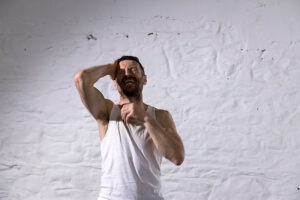
Social media can be so dangerous with some sharing so much while others go there to vent their hate…
“Completely.
“That can have a real negative impact on people who are reading it in terms of someone’s mental health.
“People start turning on people online as well and it can have a real negative impact.
“There’s no policing at all.
“You’ve no idea who you’re talking to, who they are, where they’re coming from, what their intentions are and it’s also a place that people can find these so-called ‘tribes’ that don’t really exist.
“They almost become echo chambers of what you’re saying, then you begin to find the algorithm also pushes you so if I start talking about immigration or racist rhetoric, then the algorithm starts pushing that towards me.
“Then it starts amplifying my thoughts and then I’m getting validation from what I’m seeing online, ‘Oh yeah, this is actually my community, this is what the world is like. I’m totally right here’.
“I think it started happening maybe more so around COVID, around that time period people started beginning to become more and more insular and seeking more information online and it created that type of paranoia.
“Then people started going down rabbit holes and if you were in any way vulnerable, you were really exposed.
“I think it’s been proven over the last few years.
“Australia are banning social media for under 16 year olds for that very reason.
“It can be so toxic and if you’re in any way vulnerable or need support, they can really, really dial in on you on the internet, on social media especially.
“So it’s a lawless place.
“Like you said lawless is a really good word to describe it.”
Australia and Britain have introduced social media bans and Ireland is talking about it so the story is very timely in that way..
“Yeah, but I think that’s the truth behind great stories.
“It doesn’t matter when you read them, you go, ‘This is today’.
“But it’s so relevant: The social media, anti-immigration, the mental health.
“These are all hot topics at the moment and really important topics that we should be talking about.
“I believe that it’s our responsibility as individuals, first and foremost, to help each other if we can, to support each other as best we can but also as a society that we’re responsible for those people who need help and support.
“That’s a responsibility whether it’s on a global level in terms of what happens in places like Palestine or Ukraine or any of these countries where they need support, or on a local level where your neighbour, your friend need support.
“That’s our responsibility.”

Echo chambers can be so dangerous. You spoke about the far right, incels would be another group of people who are susceptible. These people can be ‘radicalised’ into blaming immigrants or women for all their problems..
“Yeah, totally.
“Everybody needs someone else to blame for their problems but there’s always somebody who’s willing to point out, ‘It’s that person’s fault over there. It’s her fault, it’s his fault, it’s the immigrant’s fault. You know what? If we got rid of them, things would be alright for you’.
“But they’re only doing that because they have their own intentions behind it.
“They’re looking for more power, they’re looking for more control and they’re using your discomfort, your pain, your suffering as a vehicle to help support their goals, their intentions.”
They are banning social media for children but the thing is adults can be as bad if not worse..
“Monkey see, monkey do.
“The most important thing that people can do for younger generations is lead by example.
“You’re telling your child, ‘Stop doing social media’ while on the phone all the time.
“You see it everywhere you go: Parents walking down the road with a child in a pram on the phone on social media.
“Example is everything: Lead by example, lead by your actions.
“I think it’s the most important way rather than telling someone, ‘Don’t do that, don’t go there’.
“Don’t tell me what to do if you’re not going to do it as well.”
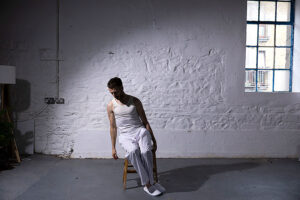
I can imagine it being a very full on, perhaps draining thing to perform..
“It’s a very physical piece of theatre: Very high energy peaks and troughs, emotionally up, emotionally down, mentally having to be on point.
“It’s 60 minutes but it’s me engaging with the audience for 60 minutes on my own on stage, no one else around.
“I never leave the stage so it’s just trying to tell that story and keep the energy up the whole time.
“But it’s brilliant.
“It’s amazing the opportunity to be on stage engaging with an audience for 60 minutes like that, I love it.
“It’s such an exciting opportunity and Edinburgh is such a brilliant platform for this play.
“I think it really is the perfect opportunity to showcase this play for the first time.”
Due to the subject matter I’m sure you will get people coming to you with their own experiences and takes, stuff you hadn’t even considered perhaps..
“100%, and that’s what you really hope for.
“I’m not here preaching and telling you what to think about the play, that’s not the purpose at all.
“There is a lot of comedy in this as well, as in life.
“It’s not just one tone.
“Diary of a Mad Man people might think, ‘Oh, this is going to be a very serious piece of theatre’ and the subject matter is serious for sure but there’s a lot of humour as well.
“I think it’s important that people realise that there’s a drama element, there is tragedy but it’s got a lot of comedy as well.
“Being Irish, everything has to have an element of comedy to it and it’s also like the most serious moments are often filled with comedy which gives that lovely balance to them as well.
“It just helps connect with the audience so much more than serious, serious, serious.
“Humour is a vital part of this play so it’s one minute you’re laughing, the next minute you’re crying, the next minute you’re shirking back in a real uncomfortableness.”

The play is set in a mental asylum which is interesting as we live in a world where people’s breakdowns can be used as fodder for views and likes..
“It’s now becoming a fascination to watch someone have a breakdown live on TV or live online.
“It goes back to that thing of Britney Spears or even Charlie Sheen breaking down.
“Everyone’s there like, ‘He’s having a mental breakdown but this is brilliant TV, isn’t it?’
“Netflix did a documentary on Charlie Sheen and it was a fascinating watch but at the same time you’re like, ‘Someone’s having a mental breakdown but this is entertainment?’
“Britney Spears has a breakdown and it’s like entertainment.
“It’s not, ‘Maybe we should be actually trying to help this person…’
“’No, no, wait, this is going to be really interesting. Wait till he gets on top of the building, starts shouting, tiger blood coursing through his veins’.”
Yes when you speak about it like that I don’t remember anyone reporting on Britney’s troubles with any tone of concern, more rubbing hands with glee..
“Someone’s there videoing it and taking pictures and using that to promote their online product or online articles instead of going, ‘Maybe we should help her’.
“’No, no, don’t help her. This is f**king gold. This is entertainment’.
“And it’s like that real kind of rubber necking thing.
“When people go by an accident, ‘What’s going on here? Someone’s in an accident. Gotta have a look’.
“So with this character in this story, Diary of a Mad Man, he starts behaving in a real erratic mad manner and the more he behaves this way, the more entertaining it becomes to watch, the more the audience start pushing him to behave in an even madder way.
“It’s like, ‘This is brilliant, this guy’s absolutely having a mental breakdown on stage and this is so entertaining’ until we get to the end and then maybe potentially the audience begin to realise, ‘Oh, hang on a minute. Do we have a hand in maybe pushing him towards this extreme behaviour in his mental breakdown?’.
“To get a bigger audience, you’ve got to go further.
“You’ve got to go bigger and then the behaviour gets pushed and pushed.
“Even the social media figures who have huge followings talk about how toxic it’s been for their own mental health.
“It’s a very toxic environment.
“It’s not an environment that promotes good behaviour or healthy behaviour and it’s again having to seek validation outside all the time.
“You’re never going to feel that validation truly because it has to come from inside really.”
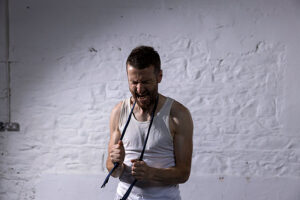
It’s harder to avoid now. All you have to do is check the time on your phone or open your laptop and you will see the notifications..
“Imagine someone was walking behind you the whole time shouting at you, ‘Yo, what’s going on over there? Listen to this. This shit’s going on. You’re bullshit. You’re an idiot. Why you doing that?’.
“You’re like, ‘Man, leave me alone’.
“That’s your phone.
“That’s what it’s basically doing.
“It’s just there shouting at you the whole time.
“It’s like, ‘F**k off’.
“But then all these app companies and phone companies, they’ve got buildings full of psychologists all trying to figure out ways of making you press the button, go into the social media, read the comments, engage with the phone.
“You haven’t got a chance.
“That’s why I think our relationship around phone use is just so important and that’s why it’s so great to see countries bringing bans in to help limit the access to the phone, social media especially so you don’t start building up that because the more you engage with it, the more you want to see what’s going on, you start living in the social media world and less in the real world.
“You see people walking down the street, crossing roads on their phone not even looking where they’re going.
“People with the pram looking at the phone, crossing the road.
“You’re like, ‘Oh my god’.
“And everyone is guilty of it.
“We just can’t help it.
“It’s like a drug, not even a good one.”
The play will get people off their phones for at least 60 minutes which has to be good..
“They have to be off their phone and that’s the thing about theatre.
“I can still be looking at my phone and watching the TV, there’s nothing stopping me there but the theatre forces you to engage in the moment with what’s happening in front of you.
“It’s an opportunity for people to come into a space and actually feel, really feel deeply on a level that they just mightn’t get to do in the real world because they’re always avoiding emotions, avoiding feelings, engaging more with the social media world but in the theatre, that’s the space where it’s visceral.
“I’m hoping, that everyone who goes to the theatre goes, ‘God, I should do more of that’.
“Now’s your chance.”
Diary of a Mad Man is at Assembly Roxy, Roxyboxy 5- 31 August as part of Edinburgh Festival Fringe.
To book, go to Assemblyfestival.com.
For more information about Mark, go to markmcauley.com.