


 Laoisa Sexton told David Hennessy about The Ulysses Project, the film that reimagines the James Joyce classic with a cast including Barry Ward, Aidan Gillen and the late Shane MacGowan, ahead of its Bloomsday screening at The Irish Cultural Centre.
The Ulysses Project, a film from Laoisa Sexton and Trevor Murphy, screens at The Irish Cultural next week to mark Bloomsday.
The film will return to the ICC having screened there in 2024.
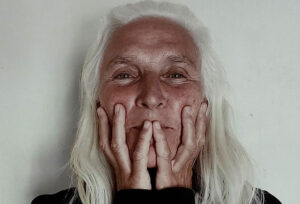
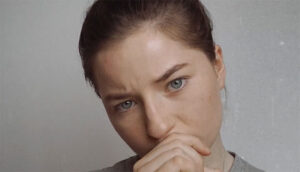
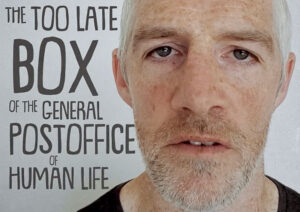
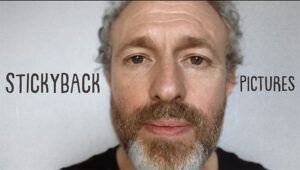
The Ulysses Project is a reimagining of Ulysses that unfolds through a rapid succession of over 75 actors, each bringing to life the characters encountered by Leopold Bloom on June 16th, 1904.
Filmed entirely during the first pandemic lockdown, the project captures a collection of intimate and finely detailed performances.
The ensemble cast features John Turturro, Aidan Gillen, Olwen Fouéré, Patrick Bergin, Shane MacGowan, Paula Meehan, and Barry Ward.
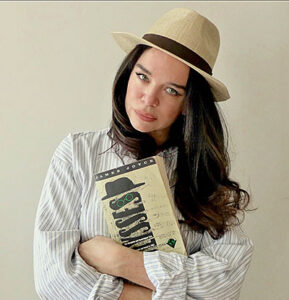
Laoisa Sexton is an Irish actress, playwright and filmmaker.
She studied drama in NYC and performed regularly on Off Broadway stages including the Irish Repertory Theatre.
It was also in New York that she took part in Bloomsday readings celebrating the work of Joyce, an experience that inspired the idea for the film.
Laoisa took time to chat to the Irish World.

I know the initial idea was not to have so many different voices or even such established actors, how did the project start?
“I made it with my partner, Trevor Murphy.
“First of all I was thinking, ‘I’ll just ask a bunch of friends, about 20 actors or something’.
“I thought, ‘I’ll just get about 20 actors or something’.
“Then what happened was I had to speed read the book because I’m really familiar with Molly and I’m really familiar with Gertie and the more female passages and then there’s a lot of stuff that I would hear read so I was familiar with it but I was kind of trying to structure it together.
“I mean Joyce is brilliant in that way.
“He allows you to open the book anywhere.
“I’m not a scholar.
“I’m not a Joyce scholar by any means but I find you can do that, you can just open the book so I was trying to sort of carve out the day, the 16 June day in a way.
“I was also determined that there would be lots of women in it because I find sometimes when you do readings or it’s performed, it’s normally a load of men and then Molly comes in at the end.
“Don’t get me wrong, I love Molly.
“She’s foul and frank and layered and brilliant.
“But when I was looking through it, I found all these other women like the episode Circe where they go to Nighttown.
“I love Joyce.
“I couldn’t care less what I’m supposed to know about him or not know about him.
“I just love the language and I love the wordplay, the Dublinisms.
“It’s so modern and I just love all that.
“I feel like it’s very relatable.
“You open the passage and there are these chunks about racism and justice and you’re like, ‘Whoa, how did he know all this stuff?’
“But I guess, as my dad says, history repeats itself but I think as an actor, when you come to it, it’s such an amazing thing to perform as well because you got all these delicious words and sentences that you’re able to imbue with all kinds of deliciousness.”
From that start, it obviously grew to include names like Barry Ward, Olwen Fouéré and Patrick Bergin. How did it go from being something you were doing with a few friends to that?
“When we started getting tapes back I realised, ‘Oh, this is much more interesting’.
“All the actors share the roles.
“There’s about 30 Leopold Blooms, there’s tonnes of Mollys.
“I was trying to get the rhythm of the book so we found that when I would give certain passages to certain actor friends and then they would deliver it and if I knew them really well, I’d be able to go back and say, ‘Could you do that again but could you do it this way or could you do it a bit faster?’
“It’s not a book, you’re actually talking to someone so the rhythm dictated the fact that I knew we needed more people and then I just started reaching out to people.
“I knew someone and she knew Patrick Bergin.
“She said, ‘Oh, Patrick Bergin is a big Joycean person’.
“And then she was able to put me in contact with him.
“It just sort of grew like that.
“It was kind of through friends.
“Friends of friends knew people and they just kept suggesting people.
“We also we wanted it to be diverse so we didn’t want it just to be Irish people, we wanted all kinds of accents.
“I have a friend, he’s from Ballymun and he was just like, ‘Oh my god, I don’t know what to do with this stuff’.
“He had never read it before and then I broke it down for him.
“I was just like, ‘You’re just in The Chemist and you’re just buying soap and you’re just commenting on the guy behind the counter. He’s kind of old, and you’re getting all the smells’.
“So he was like, ‘Oh yeah..’
“Then I had Hazel Doupe.
“She was brilliant.
“She wasn’t that familiar with it and she was playing this nymph.
“I said, ‘Just think about it like Romeo and Juliet’ because it was also like we were trying to match it with another actor so we had to get that match right, that they were in the same rhythm even though they weren’t in the same room.
“That’s kind of where the difficulty lay and why it got from 20 actors to- I think it’s about over 75 or something.
“I haven’t actually counted but it was a lot of work.
“It’s funny because even though it was done in lockdown, we screened in 2022 in Dublin at the IFI and they said to us, ‘It’s not a lockdown project, it’s grown’.
“I hope that every year we’ll find somewhere to screen it for the Bloomsday because people did such beautiful work.
“It was originally done for charity.
“It was for homeless pregnant women in Brooklyn and we raised money for them during a hard time.
“We never thought that it would screen in a cinema and it was a pleasant surprise when I saw it the first time in cinema because it goes from face to face and you’re just alone with this.
“People’s faces are amazing so you’re just alone with his face and they’re 30 feet high.
“It’s very different than just watching it on a compute so I think it would be great to find more opportunities to screen it around the world.
“It’s absolutely beautiful.
“Everyone worked really hard.
“It’s great now it’s getting attention, that it’s not just a lockdown project because I think it goes beyond that.”
Someone else who was involved and has sadly since passed on is Shane MacGowan..
“Yeah, there was an actress involved and she knew him and his partner so she said to me, ‘Oh my god, Shane MacGowan, he’s such a Joycean. He absolutely loves Joyce’.
“So she mentioned it to him and he said yeah.
“He wasn’t very well at the time and we felt so bad because we didn’t want to push someone who wasn’t well or anything like that.
“I actually didn’t even get to speak with him because we sent the information to his partner and then she recorded it.
“He was so sweet but he was sick and he was sitting in a chair and we were like, ‘Oh my god, how are we going to blend this with everything else?’
“But we found a really clever way or at least Trevor found a brilliant way to do it.
“We also had Spider Stacy from the Pogues so he was amazing too and a really good actor.
“At one point we nearly had Johnny Depp because of Shane MacGowan.
“We were asked to pass on the script and then it went nowhere but it was fine because it was just getting longer and longer.
“Olwen I had met her at some film premiere or something so I reached out and she was so generous and she’s so beautiful.
“She’s like the ultimate Molly.
“She’s like the earth goddess.
“She’s fantastic in the film.
“It was so hard because some actors didn’t have experience with Joyce and then some actors had tonnes of experience with Joyce so they’re used to performing it.
“There’s also, I think, sometimes this kind of way people approach Joyce that we were trying to work against.
“We wanted it to be modern and the delivery to be modern.
“Hopefully James Joyce is okay with that but I think he would be.
“You want it to be natural, that people understand.
“I think the film is good for people who’ve never really picked it up and they get a good sense of it.
“I’ve had friends who don’t know anything about it and they’re like, ‘What is this?’
“And then they’re sort of captivated by the performances and they get it.
“We were just trying to make some art because at that point we all thought we were never going to work again as actors.
“Joyce inspires so many things, so many musicians and so much art.”
Speaking of Johnny Deep, you did have a Hollywood star in John Turturro..
“Yeah, he came and performed at one of the readings in Brooklyn.
“Some of these Italian guys, two of them came down, and they were like, ‘What is this?’
“And they loved it and read it.
“And so the guy asked him would he do a bit.
“I actually didn’t get to speak with him because it was very, ‘Yeah, we’ll take care of it’, kind of thing and we just went with it and he turned in the tape and it was beautiful although he said the word Howth wrong, he said How-th but it was so beautiful and he matched Olwen so we put them together and it’s like they’re in love with each other.
“It’s so stunning, him with her and you just go back and forth between the two.
“I know it’s supposed to be Leopold but it’s kind of Jimmy Joyce and Nora.
“It kind of reminds me of that anyway when I watch it.
“I tried to get Gabriel Byrne.
“He was actually very nice, he gave a big donation to the charity but he wasn’t able to do it.
“But there was a couple of people, you know, we were like, ‘People are saying yes’.
“Some people were really great because we had to go back and forth with them and ask them, ‘Could you redo this a little bit different?’ just to fit the rhythm because it’s very fast-paced.
“It’s not slow, the film at all.
“It just goes boom, boom, boom, boom, boom.
“It’s 90 minutes but it’s really rapid succession and because the actors are all sharing the roles, if you don’t like one actor, there’s another one coming up so you don’t get bored.
“I had a friend and she was like, ‘Oh, I don’t know how I’m gonna feel about watching people’s faces’ and then she was like, ‘Oh my god, it was totally captivating’.
“But audiences really reacted to it really well.
“We had Fionnuala Flanagan show up, she came to the Dublin screening.
“She said she just absolutely loved it and she was the quintessential Molly.
“She just thought it was so modern.
“She said, ‘You’ve just totally brought it to this century’.
“We were like, ‘Don’t be precious about anything, just say it the way you’re going to say it’.
“It was a tough time.
“It was funny because I’d ask someone, they’d say yes so then we’d send out a whole thing written up, ‘Please record yourself like this, do it in different focal lengths, record yourself against a neutral background’.
“We’d send it to the actor and then they’d send us back the tapes and then we’d sort of figure out who went with who, who worked with who, who suited kind of chemistry wise and rhythm wise.
“I’ve made a few short films and they’re all about the rhythm.
“It’s so important.
“It’s something Joyce teaches you, I guess.
“We sent directions to actors and we also, at the end of what they recorded, said to them, ‘Can you give us a few reactions and that can be any emotion you want. It could be laughing, it could be questioning, it could be sadness’.
“The amount of tapes we got with people weeping, crying.
“We were like, ‘What is this?’
“But we realised, ‘It’s lockdown’.
“Everyone was kind of unhinged.
“No one knew what was going on so there was this really special moment and we were able to use that and I guess that helped.”

Obviously you cannot get the whole book into a 90 minute film, how was the experiencing of editing James Joyce’s classic?
“I have to keep repeating this because I know there’s a lot of Joyceans out there that might be, ‘Oh my god, she really took liberties’.
“I love that quote by Joyce where he says, ‘Love loves to love love’.
“I love that.
“But to answer your question I have to repeat that I’m not a scholar so I found a couple of episodes that I hadn’t come across.
“Mostly I found these women and I’m always interested in putting women in the centre because you would see these readings and they would be men, men, men and then they maybe do Gerty.
“She was always my favourite.
“I liked her more than Molly.
“I used to bring the house down with her.
“I think that’s the episode why the book was banned.
“I always find Molly is fascinating but why just Molly at the end?
“Because you always expect, ‘Oh, Molly’s going to come out at the end’.
“It was really important to thread the men and women the whole way through.
“I actually didn’t make a conscious decision with the book.
“I didn’t go, ‘Here’s the book. How do I edit this?’
“I kind of used passages that I was familiar with and then when I was stuck I kind of went, ‘What does this actually mean?’
“And then I would go back to the book and I’d be like, ‘Oh, look at this passage, this is brilliant. Why don’t we use this?’
“And for some reason, it just started to form itself.
“To have these men on a journey and then the women and the Circe episode which is where they go to the whorehouse, Stephen Dedalus and Bloom, just opened loads of doors for me because he’s suddenly in a courtroom and there’s all these women accusing him of terrible things and there’s even lines in it like, ‘me too, me too’.
“I was like, ‘Oh my God’, so I used that.
“There’s literally a chorus of women saying ‘me too, he did this’, ‘he sent me this lewd letter’, ‘Oh, I got the same’, ‘Oh, me too, me too’.
“And I was like, ‘You have to use this’.
“It’s funny because you could come to the book and go, ‘This is a lot of dirty stuff in here’.
“It’s quite sexual and because where we are at the moment but I think Joyce is brilliant because he comments on it but then he always pulls himself back.
“He’s always making fun of himself, even in that episode in particular because they’re all accusing him of things.
“There’s one thing I found where there’s a maid and she was in Bloom’s household and I guess she was fired because Molly didn’t like her because she was sort of sticking out her bottom and very seductive.
“She’s in the courtroom and she’s trying to tell the judge what happened and he’s like, ‘Nonsense, nonsense, ridiculous’.
“He just throws it out so I was thinking, ‘This is really timely and Harvey Weinstein stuff’.
“I was like, ‘Oh my God’ but he makes it funny and it’s amusing but he also sends himself up.
“It’s really great that the film’s been given the opportunity to be shown.
“If we could get a screening every year, it would be great.
“It’s like something we never thought about.
“We were just like, ‘Let’s do it for charity. It’s a hard time right now’.
“The actors all gave of their time for that charity so we never thought it was going to be shown anywhere.
“There’s so many ways you can interpret the book and there’s so many episodes that are missing from the film, it’s not like the entire book but it gives you an overview of the journey of that day, it gives you snippets of things that happen along the way, and just of human nature and what it is to be human.
“I think that’s what connects you to the work.”
The Ulysses Project screens at The Irish Cultural Centre on Tuesday 16 June. The film will be followed by a Q and A with film makers Laoisa Sexton and Trevor Murphy.
For more information, click here.
