

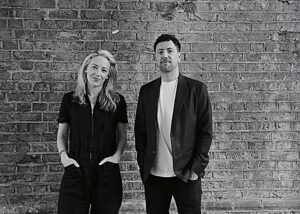
Aoife Ní Bhriain told David Hennessy about her new album collaborating with Cormac McCarthy ahead of its forthcoming London launch.
Two of Ireland’s most distinctive and versatile musicians, Aoife Ní Bhriain and Cormac McCarthy, recently released their collaborative album Cosán Casta.
Having launched it in Dublin and Cork, the duo bring the album to London next month.
Aoife Ní Bhriain from Dublin has established herself as one of the most versatile musicians of her generation.
Cormac McCarthy is a pianist, composer, arranger and conductor from Cork, Ireland.
Aoife, who grew up in the north Dublin suburb of Bayside, took time to chat to us about the new album.
Aoife grew up in a family of musicians. Her father Mick O’Brien was a schoolteacher and is one of Ireland’s leading uilleann pipe players. Her mother Fidelma is a music teacher who comes from a large family of Irish dancers and musicians.
Her paternal grandfather was the renowned accordionist ‘Dinny’ O’Brien, her uncle the equally famous tin-whistle virtuoso ‘Donncha’ O’Brien.
Aoife has worked with leading orchestras (The Royal Philharmonic, the Royal Chamber Orchestra, Stargaze Ensemble, Concorde Ensemble, Crash Ensemble, RTÉ Symphony Orchestra, Dublin City Chamber Orchestra and more), whilst also starring in Riverdance, winning the All Ireland Fiddle championships seven times, The Sean Ó Riada Gold Medal (2010), collaborating with maestros of the trad scene like Martin Hayes and breathing new life into the old trad tunes collected by the mid-19th century revivalist Canon Goodman as part of The Goodman Trio, with her father Mick and flautist Emer Maycock.
She has been based in London since 2019.

How did you and Cormac come together?
“Cormac and I actually played together for the first time at the Kilkenny Arts Festival a few years ago.
“And there was an instant connection and we thought that was really fun and that went really well.
“So we were like, ‘Oh, that’s interesting. There could be something there’.
“And then I was actually presenting a television programme for TG4 and we were doing a programme in Cork and they said, ‘Oh, is there anybody from Cork you’d like to play with?’
“I said, ‘Well Corma McCarthy would be great. We just did a few gigs last year and people really enjoyed it’.
“And then last year at the RTE Folk Awards, I actually won the RTE Folk Musician of the Year.
“But obviously I didn’t know that before the folk awards and they had asked me if there was anybody I wanted to play with.
“And I was like, ‘Oh, well, I don’t know’.
“Catrin wasn’t free and when I said I could play with my dad they were like, ‘No, maybe somebody else’.
“And I said, ‘Well, what about Cormac McCarthy?’
“And they said, ‘Well, actually he’s going to be there anyway’.
“So I said, ‘Well, great. I’ll just play with Cormac. That’s perfect. I love playing with Cormac’.
“And for the first time in the history of the folk awards, there was a standing ovation for one of the acts after we played.
“We were just standing on stage looking at each other. We didn’t quite understand what had happened.
“The place went completely bananas and I was a bit shell shocked.
“I think that was when we knew we had to do something extra. We had to continue on.
“That’s how it started.”
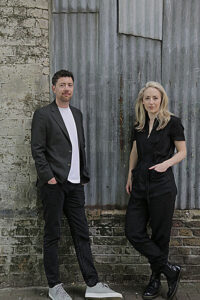
There is so much shared in the traditions you both come from. Coming together to record, did you find you had a lot in common?
“We have a lot in common.
“Cormac and I both grew up in very traditional households in the sense that traditional music was very much the language of the house.
“We would have grown up listening to the same players, going to the same festivals but never actually meeting one another which is kind of crazy because our parents are friends.
“Cormac went to America to study and I went to Germany to study.
“It’s funny because there’s an IMRO award that Bill Whelan gives and we both won it the same year so we had to split it and we were both raging that we had to split the award.
“We had never met each other.
“We were both separately totally annoyed that we were going to have to split the prize money.
“I was like, ‘God, who’s this Cormac McCarthy fella?’
“And he was thinking, ‘Who’s this Aoife one?’
“So that’s just another funny thing that we both won that prize so many years ago and kind of rubbed each other up the wrong way about it too without even knowing it.
“So yeah, lots of similarities because obviously Cormac also studied classical music growing up and I had a huge interest in jazz growing up particularly in the music of Stephane Grappelli, Django Reinhardt. I loved Jaco Pastorius as well growing up.
“So we had all these mixes but fundamentally what we share the most is that we come from this Irish tradition and no matter how far we travelled, we couldn’t get rid of it. It stayed with us and to be honest, I never thought I’d get to make an album like this.
“I never thought I’d actually find somebody that could do all the things I wanted to do and kind of agreed with me about them as well.
“I think Cormac felt the same way.
“Both of us always wanted to do an album of traditional music with a twist that was really making it our own.
“It’s been a real release and a real pleasure to do that because everything we do is absolutely informed by the tradition, absolutely correct but we want to push it further and we want to see what kind of music we can make that’s informed and from the tradition but uniquely our own so kind of mixing the old and the new as much as possible and writing as well.
“We’ve written our own stuff on the record too and we’ve combined classical music like Chopin/ Lockatelli so it’s just been a really, really lovely experience and actually, to be honest, a very easy experience.
“We just seem to get on really well.
“We’re both on the same page.
“I might say to Cormac, ‘For this tune I was kind of thinking it would be really cool if we did this chord’, and I’d like play the chord on the violin and Cormac can turn around and say, ‘Oh, that chord is called blah, blah, blah in jazz theory’.
“And I’m like, ‘Great, whatever you said, Let’s do that one’.”

Why did you decide to call the album, Cosán Casta?
“Cosán means path, Casta means twisted.
“I think for us, it’s really to reference that people see your career from the outside and they see that you’re doing all these things.
“I’m playing classical music, chamber music, contemporary music, folk music, Irish music, stuff with Catrin, baroque music.
“People just assume that this is some kind of straight path that you took and followed whereas for Cormac and I, it’s completely the opposite.
“Our careers have meandered and twisted and turned in ways we could never have imagined yet we still end up together playing Irish traditional music in our own way.
“For us the name of the record is just to reference the journey we had as musicians to get to this point and to kind of also feel comfortable enough in our own identities as musicians that we feel we can really give something to the traditional music community who means so much to us that is uniquely our own and is kind of coloured in by all the musical experiences we’ve had along the way.”
Was it always going to be music for you? Did you ever think of doing something else?
“No, I never really thought of anything else because there never was another option actually.
“I started playing the violin when I was two and I never looked back actually.
“I just never understood that there was another option because everyone in my family played music: My grandparents, my mam, my dad, my brothers, my sisters, my cousins, all the kids on the road.
“I presumed that music was a universal thing that everybody did.
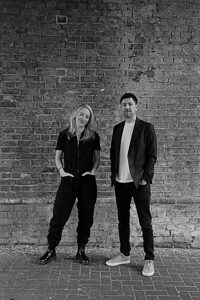
“I didn’t understand when I went to primary school that people didn’t go home to practice their instruments because that, to me, was just the most normal thing in the world.
“And it was similar for Cormac.
“It was like our lives were surrounded by music and surrounded by musicians.
“I think for us, it would have been strange to opt not to do music.
“Growing up I played a lot of classical music.
“I still play a lot of classical music.
“I love playing classical music but I could never turn my back on Irish traditional music because you can’t turn your back on your heritage.
“You can’t turn your back on your family, your culture and that’s fundamentally who you are as well.
“For us growing up it was language, music, song, dance, football and hurling.
“We were so intertwined with the Irish culture and then classical music, to me, just made sense as a second language the way English was a second language. That’s how I grew up.
“For me it was like, ‘Oh, you can be bilingual. You can be trilingual’.
“For me music was a language that had all these different strands and accents and if you had one, you could access others.
“My career has been so varied: I’ve worked on the West End, I’ve worked with orchestras, I’ve played traditional music, I’ve played pop music, contemporary music, jazz music. You name it.
“I’m kind of a jack of all trades, master of none.
“But you’re just constantly juggling.
“I love to play with others.
“That’s really what I love to do so the duo with Catrin, the duo with Cormac, the duo with Liam Byrne, a fabulous viola da gamba player.
“I have a trio with my dad and Emer Mayock called the Goodman Trio.
“I have a string quintet called Wooden Elephant.
“I just love to share music and share creative ideas with others.
“And for Cormac, it’s the same.
“He’s just an incredible collaborator.”
As you say there has been great variety in your career and you have played with impressive people such as Martin Hayes..
“I’ve worked a lot with Martin and he’s been a huge support to me actually.
“He’s been just amazingly supportive of anything I’ve ever done.
“He’s somebody I can call to talk to about music at any time and that’s something I really appreciate because he’s probably one of my favourite fiddle players of all time so to have him as a pal, to have him as a mentor, it means the world.
“And for Cormac as well, Cormac works with him with the Common Ground ensemble.
“Martin is, just as I said, so supportive with anything we do and that really does mean a lot.”
What has been a highlight for you of all you have done, would your RTE Folk Award be up there?
“No, honestly the highlights that I’ll always look back on are when my granddad was still alive and we were just playing tunes in the house all of us together.
“There was a great session the weekend of my wedding where all of my family were playing music together and for me, that’s the highlight.
“It’s seeing it pass on from generation to generation and knowing that the music is still part of us, still part of the family.
“When I play I’m not just playing for myself, I’m playing for the teachers that had such an impact on me, some of whom are no longer with us, who I miss dreadfully every day because a teacher is your best friend, not just somebody that teaches you music.
“And my granddad and people from the family that aren’t here anymore, that’s what it’s all about at the end of the day.
“Winning a prize, winning an award, that’s nice, but it doesn’t mean anything.
“There’s so many musicians out there that are so deserving of awards every day and if you win one, it’s a lovely thing and you’re very appreciative that people recognise what you do and that they seem to like it, but ultimately it’s not important.
“What’s important is the legacy that you leave and that’s more about who you are as a person and how you approach your music than any trophies on the shelf.
“They just need to be dusted.
“They’re not as exciting.”
You played the Return to London Town festival in 2021, did you see the late Sean Keane who was also there that year?
“I did actually, and he’s a huge loss to the traditional community.
“His death really shook us all.
“I did actually get to see Sean and I saw him a few times since and had some tunes with them.
“And again, just a great Dublin fiddle player with such encouragement for the next generation.
“He was the most remarkable man.
“He was so kind and just so invested in music and in helping the next generation.
“I can’t quite put into words what he meant for Dublin fiddle playing in particular.
“He’s greatly missed and I do miss bumping into him and having long, deep chats about fiddle strings and fiddles and styles and all that kind of stuff.
“He was very important.”
Aoife was speaking to us ahead of the special launch shows in Ireland.
Are you looking forward to lunching the album?
“It’s always a nerve racking thing to put yourself out there and put your music out there because you can’t control what comes back.
“We’re just hoping that people like it.
“We just hope that people resonate with it a bit and see where we’re coming from.
“But it remains to be seen what people think.
“It’s going to be a really interesting few weeks to see what their reaction is.
“And we just hope people like it because we really enjoyed putting it together and we really enjoy playing together.
“I hope this is the beginning of a beautiful musical partnership with Cormac and that we’ll continue to do more projects and make more music in the future.
“I think this is us showing our respects to the tradition that we came from while also finding our own voice and doing our own thing with it which, growing up in the tradition and growing up in that community, takes a lot of guts because you’re doing something different.
“You’re breaking the mould.
“You’re the first person to make this record.
“You don’t want to upset anybody by doing something new with the tradition but at the same time, we both really believe in this music and we really feel very strongly about it and I think it’s the truest representation of us as a duo on this record.”
Cosán Casta is out now and available from Bandcamp.
Aoife Ní Bhriain and Cormac McCarthy play Kings Place in London on Thursday 11 December.
They also play Celtic Connections in January.
